Department of Dentistry, Government Medical College, Badaun, Uttar Pradesh, India
Address for correspondence: Dr. Amit Kumar, Department of Dentistry, Government Medical College, Badaun 243-601, Uttar Pradesh, India. E-mail: drakumar2k10@gmail.com
Submitted: 07-Feb-2022
Accepted in Revised Form: 13-Mar-2022
Published: 27-Jun-2022
DOI: 10.4103/sidj.sidj_4_22
Saint Int Dent J 2022;6:16-19.
Copyright: © 2022 The Saint's International Dental Journal
Licence
This is an open access journal, and articles are distributed under the terms of the Creative Commons Attribution-NonCommercial-ShareAlike 4.0 License, which allows others to remix, tweak, and build upon the work non-commercially, as long as appropriate credit is given and the new creations are licensed under the identical terms.
Disclaimer:
This article was originally published by Wolters Kluwer Medknow Publications & Media Pvt ltd and has now been officially transferred to Society of Dental Research & Education due to a change in publishing entity.
Objective: Recurrent aphthous ulcer, also known as aphthous stomatitis or canker sores, is the most common idiopathic in nature inflammatory disease of the oral mucosa, causing a great deal of pain and discomfort to the patient. The purpose of this study was to report the prevalence of aphthous ulcers and their distribution according to gender and site in different age groups.
Materials and Methods: The present study was conducted over a period of 7 months on patients reporting to the Dental Outpatient Department of GMC, Badaun, who came for a routine dental checkup. A pro forma was created, which contained complete demographic and clinical details of all the patients, namely recorded data for age, gender, and site affected were analyzed using the SPSS program.
Results: Out of 7400 patients, 291 were diagnosed with recurrent aphthous ulcers, making its overall prevalence to be 3.93%. Cases were found to be higher in females (50.86%) than in males (49.14%). Maximum cases were reported in the second decade of life (36.77%). The tongue was found to be the most common site affected.
Conclusion: The present study has provided relevant information regarding the prevalence and distribution of recurrent aphthous ulcers that will contribute to the better understanding and consequent management of the disease.
Keywords: Oral, recurrent aphthous ulcer, sores, stomatitis
Oral ulceration is one of the most common diseases affecting the human population. Ulcerations are characterized by a defect in the epithelium and underlying connective tissue measuring approx. 2–5 mm in diameter usually resolves in 10–15 days but generally reoccurs. Ulcers can be acute or chronic/recurrent, solitary or multiple. Recurrent aphthous stomatitis represents the most common form of oral mucosal ulceration encountered in healthy individuals lacking any association with systemic disease.[1,2] The term aphthae is derived from the Greek word aphthae which means “to set on fire” or “to inflame” and is thought to be first used by philosopher Hippocrates to describe the pain associated with a common disorder of the mouth during his time.[3] The lesion starts in childhood or adolescence as recurrent small, round, or ovoid ulcers with circumscribed margins, erythematous halo, and yellow or gray floor.[4,5] These ulcers occur periodically and heal completely between attacks. In the majority of cases, it lasts about 7–10 days for 3–6 times per year.[6]
Recurrent aphthous ulcers are clinically present in three different forms: minor, major, and herpetiform.[7]
The minor form is the most common type representing 70%–85% of all recurrent aphthous ulcers. It presents as a small (up to 1 cm in diameter) shallow, painful ulceration which heals without scarring after 10–14 days
Major form accounts for 7%–20% of all cases, has more than 1 cm in diameter, is deeper, and can last for months, leaving a scar
The herpetiform form represents just 5%–10% of all cases. They are in the form of pinpoint ulcers (0.1 cm to 0.2 cm) occurring in large numbers (5–100 ulcers at a time) which sometimes coalesce to form a large and irregular lesion having a clinical course of 7–10 days.
The etiology and pathogenesis of recurrent aphthous ulcers remain unclear. Multiple factors associated with the establishment of the disease include positive family history, food hypersensitivity, smoking cessation, psychological stress, and immune disturbance.[1,8] Recurrent aphthous ulcer is a common mucosal disease, but very few studies have been done to find its prevalence in India. The objective of this study was to find the prevalence of recurrent aphthous ulcers and their distribution according to gender and site in different age groups.
The study was carried out among the patients reporting to the Outpatient Department of Dentistry, Government Medical College, Badaun, from September 2019 to March 2020. Diagnosis of recurrent aphthous ulcer was made based on patient history and clinical examination. Parameters recorded were age, gender, and site affected. The patients were divided into eight age groups (10 years of each interval). Various sites recorded were tongue, lower lip, upper lip, buccal mucosa, soft palate, and floor of the mouth. The data were collected and analyzed using SPSS software version 22.0 (IBM, Armonk, New York, USA).
Discrete (categorical) data were summarized in number (n) and percentage (%) and compared by Chi-square (χ2) test. A two-tailed (α = 2) P < 0.05 was considered statistically significant. Analysis was performed on SPSS software (Windows version 22.0).
A total of 7400 patients who reported to the outpatient department were screened, of which 291 were diagnosed to be affected with the recurrent aphthous ulcer, giving the overall prevalence of the disease to be 3.9% [Table 1]. Among 291 recurrent aphthous ulcer patients, 143 (49.1%) were male and 148 (50.9%) were female [Figure 1]. The prevalence of recurrent aphthous ulcers was 1.8% higher in females than males. The age of recurrent aphthous ulcer patients ranged from 1 to 80 years with a mean age of 25.10 years. The prevalence of recurrent aphthous ulcers was higher in lower age groups (11–40), accounting for 239, which was 82.1% of the total recurrent aphthous ulcer [Figure 2]. Interestingly, the prevalence of recurrent aphthous ulcers was found to decrease with an increase in age.
Table 1: Overall prevalence of recurrent aphthous ulcer
| Total patients screened (n=7400) | Number of patients, n (%) |
|---|---|
| Recurrent aphthous ulcer absent | 7109 (96.1) |
| Recurrent aphthous ulcer present | 291 (3.9) |
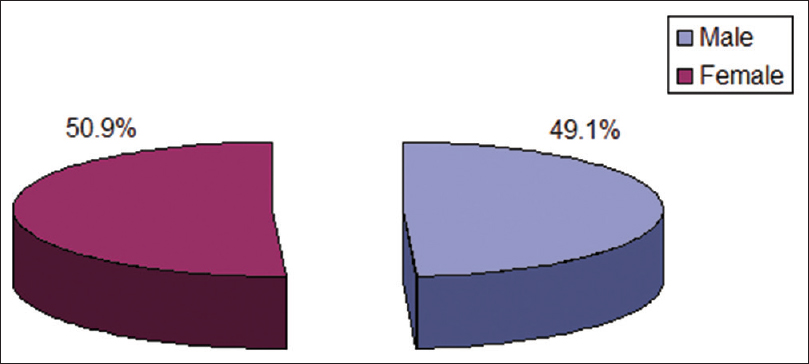
Figure 1: Prevalence of recurrent aphthous ulcer according to gender
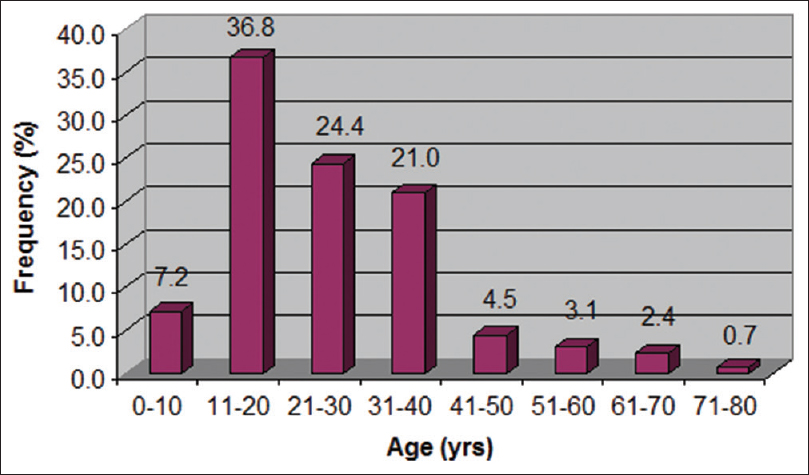
Figure 2: Prevalence of recurrent aphthous ulcer in different age groups
The prevalence of recurrent aphthous ulcers according to sites was 320, as 11 patients reported 29 more recurrent aphthous ulcers at multiple sites. According to the site, the prevalence of recurrent aphthous ulcer was maximum in the tongue (45.3%) followed by lower lip (34.1%), accounting together 79.4% of the total recurrent aphthous ulcer at different sites [Table 2 and Figure 3]. The prevalence of it was found minimum on the floor of the mouth (0.9%).
Table 2: Prevalence of recurrent aphthous ulcer according to age and sites
| Age (years) | Tongue (n=145), n (%) | Lower lip (n=109), n (%) | Upper lip (n=27), n (%) | Buccal mucosa (n=23), n (%) | Soft palate (n=13), n (%) | Floor of the mouth (n=3), n (%) | χ2 | P |
|---|---|---|---|---|---|---|---|---|
| 0-10 | 12 (8.3) | 9 (8.3) | 0 | 1 (4.3) | 1 (7.7) | 0 (0.0) | 21.19 | 0.968 |
| 11-20 | 55 (37.9) | 39 (35.8) | 10 (37.0) | 8 (34.8) | 2 (15.4) | 1 (33.3) | ||
| 21-30 | 30 (20.7) | 29 (26.6) | 8 (29.6) | 7 (30.4) | 4(30.8) | 1 (33.3) | ||
| 31-40 | 31 (21.4) | 24 (22.0) | 7 (25.9) | 4 (17.4) | 3 (23.1) | 1 (33.3) | ||
| 41-50 | 7 (4.8) | 3 (2.8) | 1 (3.7) | 1 (4.3) | 2 (15.4) | 0 | ||
| 51-60 | 5 (3.4) | 3 (2.8) | 1 (3.7) | 0 | 1 (7.7) | 0 | ||
| 61-70 | 4 (2.8) | 2 (1.8) | 0 | 1 (4.3) | 0 | 0 | ||
| 71-80 | 1 (0.7) | 0 | 0 | 1 (4.3) | 0 | 0 |
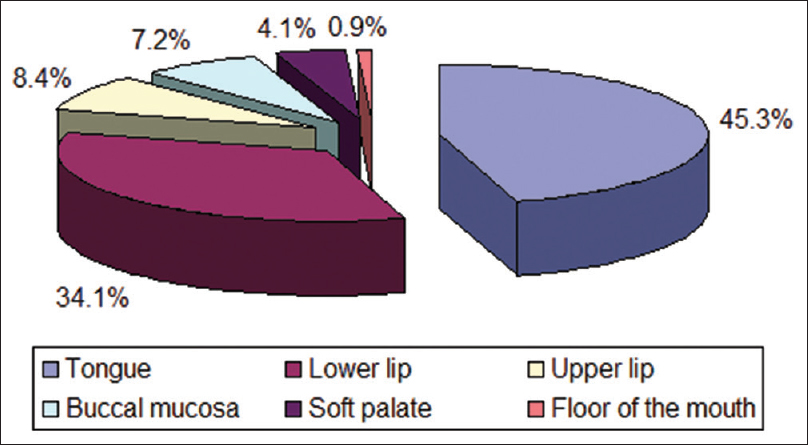
Figure 3: Prevalence of recurrent aphthous ulcer according to sites
The site-wise prevalence of recurrent aphthous ulcers in different age groups is summarized in Table 2 and also depicted in Figure 3. According to age, the maximum cases affecting tongue were seen in the second decade of life (37.9%), followed by the fourth (21.4%) and third (20.7%) decades of life. The second most affected was lower lip, again highest in the second decade of life (35.8%), followed by third (26.6%) and fourth (22.0%) decades of life. However, the Chi-square test showed an insignificant (P > 0.05) difference in the prevalence of recurrent aphthous ulcer between age and sites (χ2 = 21.19, P = 0.968), indicating a similar distribution of recurrent aphthous ulcer between age and sites.
Similarly, the prevalence of recurrent aphthous ulcers according to age and gender is summarized in Table 3 and also shown in Figure 3. In both genders, the prevalence of recurrent aphthous ulcers was higher in lower age groups (11–20 years) as compared to higher age groups (41–80 years). Like sites, the prevalence of recurrent aphthous ulcers also not differed (P > 0.05) between age and genders (χ2 = 8.12, P = 0.323), indicating a similar distribution of recurrent aphthous ulcers among age.
Table 3: Prevalence of recurrent aphthous ulcer according to age and genders
| Age (years) | Male (n=143), n (%) | Female (n=148), n (%) | χ2 | P |
|---|---|---|---|---|
| 0-10 | 8 (5.6) | 13 (8.8) | 8.12 | 0.323 |
| 11-20 | 46 (32.2) | 61 (41.2) | ||
| 21-30 | 35 (24.5) | 36 (24.3) | ||
| 31-40 | 34 (23.8) | 27 (18.2) | ||
| 41-50 | 8 (5.6) | 5 (3.4) | ||
| 51-60 | 5 (3.5) | 4 (2.7) | ||
| 61-70 | 5 (3.5) | 2 (1.4) | ||
| 71-80 | 2 (1.4) | 0 (0.0) |
Recurrent aphthous ulcer is the most common disease affecting the oral cavity. Many researchers have attempted to calculate its prevalence, but the results vary in different regions of the world, the range being from 5% to 66%.[9-11]
In the present study, the prevalence was found to be 3.93%. This, in comparison to the prevalence reported in other studies done in India, was found to be higher than reported in the South Indian population by Hegde et al. (1.9%)[12] and Mathew et al. (2.1%)[13] and in the Western population of Maharashtra as reported by Rajmane et al. (0.1%),[14] but the prevalence reported in this study was lower when compared to the findings of Patil et al. in North Indian population (21.7%).[15]
Worldwide also, the results of the epidemiological studies are greatly variable. It was estimated to be 40% in the United States of America,[16] 25.2% in Iran,[11] 25.5% in Turkey,[17] 1.4% in Brazil,[7] 28.2% in Iraq,[18] and 78.1% in Jordon.[19] Considerable variation is probably due to genetic factors, socioeconomic level, and lifestyle of individuals of the particular region studied.[20] In the present study, the overall prevalence was found to be higher in the female patients which was in accordance with the results of other researchers.[7,12,14,15,18,19] Ship et al. stated that higher prevalence in females was due to hormonal changes.[21] On the contrary, Rivera-Hidalgo et al. reported a higher prevalence in males.[22]
The maximum number of cases were reported in the second decade of life (36.76%) and then decreased with the advancing age. Ship et al.[21] and Natah et al.[23] also reported similar results. However, Abdullah18 and Okoh and Ikechukwu[24] found the maximum number of cases in the third decade of life, while Safadi[19] and Patil et al.[15] reported it to peak in the fourth decade of life. The most common site affected was found to be the tongue. Queiroz et al.[7] also reported tongue to be the most common site affected. Other studies have however reported buccal mucosa[14,19] to be the most common site. Abdullah reported lips and buccal mucosa to be the most common site.
Prevalence studies can be used to create and evaluate health-care policies in addition to detecting illness burdens in a population. Aphthous ulcers are prevalent mouth diseases that produce considerable discomfort and have a negative impact on patients’ quality of life. Despite this, the exact prevalence of recurring aphthous ulcers in India and around the world is unknown, and the data available are inconsistent. This study gives critical information on the occurrence of recurrent aphthous ulcers and their distribution in different age groups based on gender and site. Even without a proven etiology, it is also extremely important to identify factors associated with recurrence episodes to examine the potential risks of exacerbation of pain symptoms for each patient. More research like this is needed to achieve accurate disease data.
Nil.
There are no conflicts of interest.
1. Akintoye SO, Greenberg MS. Recurrent aphthous stomatitis. Dent Clin North Am 2014;58:281-97. [CrossRef] [PubMed] [PubMed Central] [Google Scholar]
2. Scully C. Clinical practice. Aphthous ulceration. N Engl J Med 2006;355:165-72. [CrossRef] [PubMed] [Google Scholar]
3. Compilato D, Carroccio A, Calvino F, Di Fede G, Campisi G. Haematological deficiencies in patients with recurrent aphthosis. J Eur Acad Dermatol Venereol 2010;24:667-73. [CrossRef] [PubMed] [Google Scholar]
4. Eversole LR. Immunopathology of oral mucosal ulcerative, desquamative, and bullous diseases. Selective review of the literature. Oral Surg Oral Med Oral Pathol 1994;77:555-71. [CrossRef] [PubMed] [Google Scholar]
5. Scully C, Shotts R. ABC of oral health. Mouth ulcers and other causes of orofacial soreness and pain. BMJ 2000;321:162-5. [CrossRef] [CrossRef] [PubMed] [PubMed Central] [Google Scholar]
6. Vaseemuddin S. A comprehensive review on aphthous ulcers of oral cavity. Int J Med Health Res 2017;3:1-3. [Google Scholar]
7. Queiroz SI, Silva MV, Medeiros AM, Oliveira PT, Gurgel BC, Silveira ÉJ. Recurrent aphthous ulceration: An epidemiological study of etiological factors, treatment and differential diagnosis. An Bras Dermatol 2018;93:341-6. [CrossRef] [PubMed] [PubMed Central] [Google Scholar]
8. Gallo Cde B, Mimura MA, Sugaya NN. Psychological stress and recurrent aphthous stomatitis. Clinics (Sao Paulo) 2009;64:645-8. [CrossRef] [PubMed] [PubMed Central] [Google Scholar]
9. Pongissawaranun W, Laohapand P. Epidemiologic study on recurrent aphthous stomatitis in a Thai dental patient population. Community Dent Oral Epidemiol 1991;19:52-3. [CrossRef] [PubMed] [Google Scholar]
10. Porter SR, Scully C, Pedersen A. Recurrent aphthous stomatitis. Crit Rev Oral Biol Med 1998;9:306-21. [CrossRef] [PubMed] [Google Scholar]
11. Davatchi F, Tehrani-Banihashemi A, Jamshidi AR, Chams-Davatchi C, Gholami J, Moradi M,
12. Hegde S, Harini K, Ajila V, Babu S, Shetty SR. Prevalence of recurrent aphthous stomatitis: An institutional study. Cumhuriyet Dent J 2015;18:228-34. [Google Scholar]
13. Mathew AL, Pai KM, Sholapurkar AA, Vengal M. The prevalence of oral mucosal lesions in patients visiting a dental school in Southern India. Indian J Dent Res 2008;19:99-103. [CrossRef] [PubMed] [Google Scholar]
14. Rajmane YR, Ashwinirani SR, Suragimath G, Nayak A, Rajmane VS, Lohana M. Prevalence of recurrent aphthous stomatitis in western population of Maharashtra, India. J Oral Res Rev 2017;9:25-8. [CrossRef] [Google Scholar]
15. Patil S, Reddy SN, Maheshwari S, Khandelwal S, Shruthi D, Doni B. Prevalence of recurrent aphthous ulceration in the Indian Population. J Clin Exp Dent 2014;6:e36-40. [CrossRef] [PubMed] [PubMed Central] [Google Scholar]
16. Shulman JD, Beach MM, Rivera-Hidalgo F. The prevalence of oral mucosal lesions in U.S. adults: Data from the Third National Health and Nutrition Examination Survey, 1988-1994. J Am Dent Assoc 2004;135:1279-86. [CrossRef] [PubMed] [Google Scholar]
17. Ciçek Y, Canakçi V, Ozgöz M, Ertas U, Canakçi E. Prevalence and handedness correlates of recurrent aphthous stomatitis in the Turkish population. J Public Health Dent 2004;64:151-6. [CrossRef] [PubMed] [Google Scholar]
18. Abdullah MJ. Prevalence of recurrent aphthous ulceration experience in patients attending Piramird dental speciality in Sulaimani City. J Clin Exp Dent 2013;5:e89-94. [CrossRef] [PubMed] [PubMed Central] [Google Scholar]
19. Safadi RA. Prevalence of recurrent aphthous ulceration in Jordanian dental patients. BMC Oral Health 2009;9:31. [CrossRef] [PubMed] [PubMed Central] [Google Scholar]
20. Akbar R, Kaur S, Pirassteh M, Tariq F, Al Tamimi D, Fuoad SA. Prevalence of recurrent aphthous ulcers in Gulf Medical University students. GMJ 2016;5:S115-22. [Google Scholar]
21. Ship JA, Chavez EM, Doerr PA, Henson BS, Sarmadi M. Recurrent aphthous stomatitis. Quintessence Int 2000;31:95-112. [Google Scholar]
22. Rivera-Hidalgo F, Shulman JD, Beach MM. The association of tobacco and other factors with recurrent aphthous stomatitis in an US adult population. Oral Dis 2004;10:335-45. [CrossRef] [PubMed] [Google Scholar]
23. Natah SS, Konttinen YT, Enattah NS, Ashammakhi N, Sharkey KA, Hayrinen-Immonen R. Recurrent aphthous ulcers today: A review of the growing knowledge. Int J Oral Maxillofac Surg 2004;33:221-34. [CrossRef] [PubMed] [Google Scholar]
24. Okoh M, Ikechukwu O. Presentation of recurrent aphthous ulcer among patients in tertiary hospital. Afr J Oral Health 2019;8:8-12. [CrossRef] [Google Scholar]