1Department of Oral Medicine and Radiology, Chettinad Health City, Kanchipuram, Tamil Nadu, India, 2Department of Oral Pathology, Chettinad Health City, Kanchipuram, Tamil Nadu, India
Submitted: 16-Aug-2020
Revised: 14-Sep-2020
Accepted: 06-Oct-2020
Published: 28-Jan-2021
DOI: 10.4103/sidj.sidj_34_20
Saint Int Dent J 2020;4:126-9.
Copyright: © 2020 The Saint's International Dental Journal
Licence
This is an open access journal, and articles are distributed under the terms of the Creative Commons Attribution-NonCommercial-ShareAlike 4.0 License, which allows others to remix, tweak, and build upon the work non-commercially, as long as appropriate credit is given and the new creations are licensed under the identical terms.
Disclaimer:
This article was originally published by Wolters Kluwer Medknow Publications & Media Pvt ltd and has now been officially transferred to Society of Dental Research & Education due to a change in publishing entity.
Herpes zoster oticus or geniculate neuralgia or nervus intermediate neuralgia, also known as Ramsay Hunt syndrome (RHS), is a rare complication of herpes zoster, which is due to reactivation of latent varicella-zoster virus infection in the geniculate ganglion. RHS causes otalgia, auricular vesicles, and peripheral facial paralysis, rare in children but occurs with a female prediction in adults. Incidence and clinical severity increase with compromised immunity and progressing age. We often stare at a diagnostic challenge as these symptoms do not always present at the onset. Herpes zoster oticus accounts for about 12% of facial palsy cases, which is complete and typically unilateral, and full recovery occurs in only around 20% of untreated patients. With these features, we report the case of a 55-year-old male diagnosed with RHS, which was treated effectively with the combination therapy of antivirals and steroids along with physiotherapy. This article has described various etiopathogenesis, differential diagnosis, and various multimodal treatments available for RHS, including the medical management for immunocompromised patients and available vaccines pre- and postexposure to ensure the better prognosis and complete recovery.
Keywords: Facial palsy, herpes zoster oticus, House Brackmann Scale, Ramsay Hunt syndrome, varicella vaccine
Ramsay Hunt Syndrome (RHS), also known as geniculate zoster, geniculate neuralgia, nervus intermediate neuralgia, or herpes zoster oticus,[1,2] is an infectious disease that arises in the geniculate ganglion of cranial nerve V and XII can affect both immunocompromised and immunocompetent patients. J. Ramsay Hunt first described it in 1907 caused by the varicella-zoster virus (VZV), which now represents the second most common cause of atraumatic peripheral facial palsy.[3] The main clinical symptoms (Classical Triad) include ipsilateral facial palsy, inner ear dysfunction, periauricular pain, and herpetiform vesicles on the pinna.[4] The RHS affects the elderly population above 55 years with 20% high females predilection and among children (<12 years) with immunocompromised status accounts for <10% of the diagnosed cases with an incidence of 2.7/100,000.[5,6] Although various clinical etiologies have been associated with this syndrome, including direct anesthesia of facial nerve, neurotoxicity of local anesthetic solution, viral reactivation, demyelination, edema, vasospasm, ascending infection, and trauma, viral reactivation is proposed to be the most likely one.[7] There are also reported literature cases of reactivation of VZV following dental procedures such as
periodontal surgeries and fitting of a crown, treatment of carious teeth, extraction of a tooth,[7] root canal therapy, and adjustment of dentures in immune-compromised patients.[1,5] Other underlying systemic illnesses, particularly hematologic malignancies such as leukemia and lymphoma maybe associated with VZV reactivation.
A 55-year-old male patient was referred from the ear, nose, and throat department of Chettinad Health City to the Oral Medicine and Radiology Department for a dental opinion. With a chief complaint of multiple eruptions in his face, scalp, mouth along with facial deviation present for 4 days. On probing more into the history, the patient revealed continuous, radiating pain to his right side of the face, ear, and oral cavity for the past 2 days and further reported experiencing low-grade fever accompanied with facial disfigurement. The patient gave a history of experiencing an episode of chickenpox during his childhood. The patient’s medical history revealed that he had diabetes with poorly controlled glycemic status for the past 5 years.
On extraoral examination, multiple vesicles were noted over the external auditory meatus, multiple macules with crustations over the right side of the scalp, face, zygoma further extended to the lower lip [Figure 1a and b]. There was the absence of wrinkles on the right forehead, the inability of the patient to close his right eye completely [Figure 2], and mild drooping of the right commissure of the lip. Intraoral examination revealed multiple vesicular eruptions with a clear fluid discharge on the right buccal mucosa [Figure 3]. Hence, the provisional diagnosis of RHS and differential diagnosis of Bells palsy, neurosarcoidosis, and Parry Romberg syndrome were given. Laboratory investigation with a hemogram, serum glucose levels, serum electrolytes, and a peripheral blood smear was done. Except for the increase in serum glucose level, other test results were within the normal limits. The patient was subjected to a Tzanck smear test, which revealed multinucleated giant cells, thus based on the above findings, a final diagnosis of RHS was derived. The patient was prescribed acyclovir 800 mg five times a day, Tablet acetaminophen 500 mg q6 h tablet prednisolone 20 mg od and vitamin supplement twice daily for 7 days and were asked to report of a review. The patient was told to rest and stay hydrated. After 2 months, during which the complete regression of lesions was noted, he returned for follow-up. Later, the patient was under physiotherapy and transcutaneous electrical nerve stimulation (TENS) therapy to regain muscular activity post-facial paralysis; the degree of facial paralysis was Grade III, using the House-Brackmann Scale [Table 1].
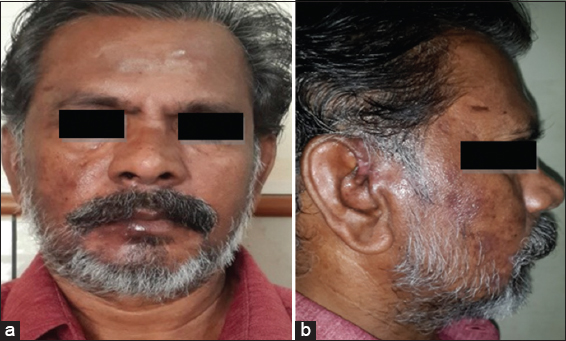
Figure 1. (a) Crustations were evident along the right side of zygoma further extended to the lower lip; (b) scalp and face involving tragus of ear
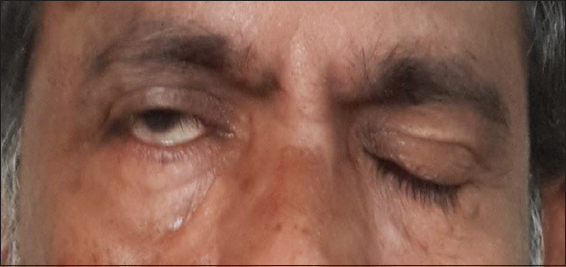
Figure 2. Inability to close eye completely
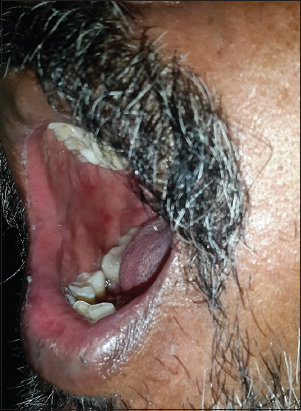
Figure 3. Intra oral vesicles seen in buccal mucosa
Table 1. House Brackmann Scale for grading facial palsy
| Grade | Function level | Symmetry at rest | Eyes | Mouth | Forehead |
|---|---|---|---|---|---|
| I | Normal | Normal | Normal | Normal | Normal |
| II | Mild | Normal | Easy and complete closure | Slightly asymmetrical | Reasonable function |
| III | Moderate | Normal | With effort complete closure | Slightly affected with effort | Slight to moderate movement |
| IV | Moderately severe | Normal | Incomplete closure | Asymmetrical with maximum effort | None |
| V | Severe | Asymmetry | Incomplete closure | Minimal movement | None |
| IV | Total paralysis |
RHS affects the facial nerve and the geniculate ganglion in the auditory canal, where it remains dormant in the sensory dorsal root ganglion cells. The primary infection causes an induction of the VZV-specific memory T-cells. This cell immunity declines over time below a theoretical “zoster threshold” leads to an increased risk of herpes zoster infection, and the average period of immunity against varicella following infection is 20 years. The pathogenesis for the reactivation of VZV is unknown. Any factor affecting the cell-mediated immunity may play an essential role in the reactivation of VZV.[8] The most common prodromal symptoms include fever, pain, vomiting, hearing loss, and fatigue for the first 3 days, followed by the signs such as nystagmus, tinnitus, change in taste along with anesthesia of two-thirds of the tongue, and presence of vesicles in the tympanic membrane accompanied with rash finally leads to pustules that dry and crust were sometimes leaving extraoral scars. When the same lesion extends, intra-orally presence of vesicles unilaterally involving the oral mucosa is seen, which may or may not affect the palate and tongue. Laboratory confirmation is based on repeated complement fixation tests showing increased antibody titer. The detection of VZV is confirmed in saliva, tears, middle ear fluid, and blood mononuclear cell with the help of a PCR test. The recurrence ranging from 2.3% to 8.0% overall and age, stress, immunocompromised status, and immunosuppressive drugs are the known factors for virus reactivation.[9] In our case, males were affected; other factors such as age and uncontrolled diabetes made them vulnerable to the virus’s reactivation.
Medical therapy should be started within 72 h of the onset of symptoms.[6,10,11]
The mainstay of treatment options for RHS is antiviral drugs [Table 2].[6,7,11] Supportive treatment during acute RHS may include:
Table 2. Pharmacological management of Ramsay Hunt syndrome
| Drug and dosage | Duration |
|---|---|
| Acyclovir 800 mg | five times daily of 7 days |
| Valaciclovir 1000mg | t.i.d for 7 days |
| Famciclovir 500 mg | t.i.d for 7 days |
| Combination therapy of antiviral treatment and prednisolone (60 mg orally daily for 5 days) | |
| Immunocompromised patients | |
| Children <1year | |
| IV acyclovir 30 mg/kg/day | 7- 10 days |
| Children >1 year | |
| IV acyclovir 500 mg/m2 | q8h for 7V10 days |
| Children 2- 12 years (with increased risk of complications) | |
| Acyclovir 20 mg/kg | PO four times daily for 5 days |
| Valacyclovir 20 mg/kg | PO three times daily for 5 days |
| Children and adults with uncomplicated varicella | |
| Acyclovir 800 mg | PO five times daily for 5- 7 days |
| Valacyclovir 20 mg/kg | PO three times daily for 5 days |
• Opioid analgesics
• Anticonvulsants, such as gabapentin and pregabalin • Ice packs on the blisters
• To combat dry eye disease, artificial tears, lubricating ointments, and eye patches
• Patient counseling and reassurance should be given during the convulsing phase.
Varicella virus vaccine life (Varivax)[12] used for vaccination against varicella in individuals 1 year and older given subcutaneously.
Children 1–12 years:
• 1st dose of 0.5 mL − 1 2–15 month
• 2nd dose routinely-4–6 year; the second dose can be given at any age as long as it has been at least 3 months since the first dose.
Adults and children 13 years and older with no evidence of immunity:
• Two doses of 0.5 mL 4–8 weeks apart.
CDC (2013) issued the updated recommendations for the use of varicella-zoster immune globulin to reduce the severity of VZV infection, extending the window for postexposure prophylaxis for those at high risk for severe varicella. Nonpharmacological supportive therapy includes physiotherapy, TENS therapy, neuromuscular retaining (MIME therapy) can be used to reduce pain and to regain muscle tone.
RHS is a rare clinical entity that, when diagnosed early, can decrease complications and the morbidity associated with it. Hence, dentists should be aware of the syndrome and examine for the signs and symptoms of intraoral herpetic lesions whenever there are signs of facial palsy. A multi-disciplinary approach among oral physicians, medical physicians, and physiotherapists is needed for prompt management and treatment to minimize postherpetic complications and ensure complete recovery.
The authors certify that they have obtained all appropriate patient consent forms. In the record, the patient(s) has/ have given his/her/their consent for his/her/their images and other clinical information to be reported in the journal. The patients understand that their names and initials will not be published and will make duel efforts to conceal their identity, but anonymity cannot be guaranteed.
We hereby acknowledge Dr. Ramlingam (HOD), Dr. Thirunavukarasu (Professor), Dr. Priya (Associate professor), Dr. Preethi (Associate professor) from the ENT Department, Chettinad Medical College, Kelambakkam for their valuable support. I also thank Dr. Nishanthini for her valuable help and support.
Nil.
There are no conflicts of interest.
1. Singh G, Subhalakshmi V, Balasubramanian S, Patidar M, Ealla KK. Ramsay hunt syndrome:A diagnostic challenge for general dental practitioners. Contemp Clin Dent 2017;8:337-9. [CrossRef] [Google Scholar] [PubMed Central] [PubMed]
2. Kannan SK, Sherubin JE, Sajesh S, Gopakumar KP. Ramsay hunt syndrome (herpes zoster oticus). J Indian Acta Oral Med Radiol 2012;24:70-2. [CrossRef] [Google Scholar]
3. Report C, Arya S, Vengal M, RaoA. British Biomedical Bulletin Lower Motor Neuron Lesion Secondary to Ramsay Hunt Syndrome:A Case Report with Review of Literature. Available from:www.bbbulletin. org. [Lase accesed on 2020 Jul 26]. [CrossRef] [Google Scholar]
4. Wareham DW, Breuer J. Herpes zoster. BMJ 2007;334:1211-5. [CrossRef] [Google Scholar]
5. Sima NH, Saidha PK, Sreenivas V. Pediatric ramsay hunt syndrome:A rare clinical entity. Indian J Otol 2016;22:217-9. [CrossRef] [Google Scholar]
6. Koshy E, Mengting L, Kumar H, JianboW. Epidemiology, treatment and prevention of herpes zoster:Acomprehensive review. Indian J Dermatol Venereol Leprol 2018;84:251-62. [CrossRef] [Google Scholar]
7. Vasconcelos BC, Bessa-Nogueira RV, Maurette PE, Carneiro SC. Facial nerve paralysis after impacted lower third molar surgery:A literature review and case report. Med Oral Patol Oral Cir Bucal 2006;11:E175-8. [CrossRef] [Google Scholar] [PubMed]
8. Kayayurt K, Yavasi O, Bilir O, Ersunan G, Giakoup B. A case of ramsay hunt syndrome with atypical presentation. Turk J Emerg Med 2014;14:142-5. [CrossRef] [Google Scholar] [PubMed Central] [PubMed]
9. Chen LK, Arai H, Chen LY, Chou MY, Djauzi S, Dong B, et al. Looking back to move forward:A twenty-year audit of herpes zoster in Asia-Pacific. BMC Infect Dis 2017;17:213. [CrossRef] [Google Scholar]
10. Gnann JW Jr., Whitley RJ. Clinical practice. Herpes zoster. N Engl J Med 2002;347:340-6. [CrossRef] [Google Scholar] [PubMed]
11. Gnann JW Jr. New antivirals with activity against varicella-zoster virus. Ann Neurol 1994;35 Suppl:S69-72. [CrossRef] [Google Scholar] [PubMed]
12. Centers for Disease Control and Prevention (CDC). Updated recommendations for use of VariZIG–United States, 2013. MMWR Morb Mortal Wkly Rep 2013;62:574-6.[Google Scholar] [CrossRef]